
“Abunda has been a crucial support in refining and achieving our vision!”
Debbie Wilkins, Norton Court Farm
Intro
Debbie Wilkins and her family at Norton Court Farm approached Abunda at a time of major transition.
After decades of nature-friendly dairy and beef farming, the family wanted to reset the farm around a clearer regenerative vision: low-input farming, high-welfare livestock, biodiversity, nutrient-dense food, direct sales, and a mix of complementary enterprises working together across the land.
But before that vision could become practical, there was a lot to untangle.
About the farm
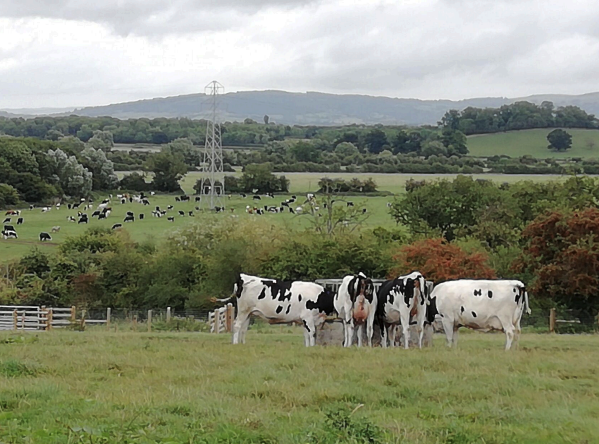
Norton Court Farm is a 938-acre farm in Gloucestershire, made up of species-rich grasslands, arable fields and floodplain meadows. It has established dairy and beef infrastructure, including winter housing, a herringbone parlour, grazing infrastructure and land capable of providing forage and feed.
The long-term ambition was to create a diverse regenerative farm, with multiple symbiotic enterprises and a strong public-facing food and community offer.
The Landholder’s situation
Debbie and her family had a strong vision, but the business was in a period of overwhelm.
There was a great deal to work through: the future of the dairy, financial transition, legal agreements, potential enterprise partners, infrastructure, grant funding, planning, interim land-use options, and a lot of potential changes.
Abunda’s first role was to help reset the “north star” — clarifying what really mattered, what needed attention first, and what could wait. This created space to pause, look after the people involved, and then move forward in manageable steps.
Abunda’s role
In this case, Abunda’s role went beyond land matching. It formed part of a broad consultancy brief covering strategic advice, land agency, financial management, human dynamics, and practical transition support.
The work included financial modelling for the transition, support with changing the existing dairy arrangements, legal agreements for residential and agricultural uses, interim solutions such as grass keep, exploring grant funding and planning advice, setting up infrastructure for community and market garden activity, and considering a strategic sale of land.
This helped take the business from a place of complexity and pressure into greater confidence and clarity.
Land Matching and enterprise transition
Alongside the wider consultancy work, Abunda helped Debbie and her family explore potential people and structures for new farm enterprises.
For the beef enterprise, Abunda helped the parties consider the appropriate legal structure with the Landseeker. In that case, employment was preferred by the Landseeker and agreed to be the most appropriate route at that stage. The role supported the development of the beef enterprise, including the use of calves from the dairy system as part of the wider farm model.
For the dairy enterprise, the longer-term objective was a Contract Farming Agreement, with the Landseekers taking on the dairy enterprise and building herd equity over time. However, all parties welcomed a transition period first — a practical “get to know each other” stage — during which employment was the most appropriate structure.
This reflected the wider vision for a calf-at-foot, regenerative dairy model, with a route towards greater responsibility, autonomy and asset-building over time.
Abunda supported the process by sharing insight on vision alignment, personality dynamics, financial modelling and the realism of the proposals. Debbie and her family remained the decision-makers throughout. Abunda’s role was to help the parties understand the opportunities, risks and implications clearly.
Outcome
The process helped Debbie and her family move from overwhelm into a more structured and confident transition.
Rather than trying to solve everything at once, the work broke the farm’s next chapter into practical steps: stabilising the business, clarifying priorities, creating interim solutions, considering suitable legal structures, and identifying where new people could support the long-term regenerative vision.
The 2 sets of Land Matches completed also wielded Debbie and her family with the insights and confidence to take more charge of the next land matches in scope. As such, Norton Court Farm is continuing to explore land matches on their own, while making use of Modular Services from Abunda.
Why this matters
Norton Court Farm shows that successful land matching is not just about finding interested people.
It is about preparing the ground properly — financially, legally, practically and relationally — so that new regenerative enterprises have a better chance of lasting.
At Norton Court Farm, Abunda helped the Landholder slow down, clarify the vision, and move towards a farm structure capable of supporting people, animals and land well over the long term